• The Idea Mill – Chapter 2

    The Lever of Possibility

    The clock on the Idea Mill’s wall ticked past two in the afternoon when Michael slipped his badge into the reader and felt the soft green light flash “ACCESS GRANTED.” He paused at the threshold of the automotive bay, the smell of motor oil and fresh-cut metal greeting him like an old friend.

    A hulking figure stood bent over a workbench, the silhouette of a leather jacket and shaved head catching the fluorescent glare. The man’s shoulders were as wide as an ox, his forearms thick as a 2 liter bottle. Yet when he looked up, his eyes crinkled in a grin that softened the intimidating exterior.

    “Hey, kid,” the man rumbled, wiping grease from his hands onto a rag. “You look like you’ve got something on your mind.”

    “I… I need a new brake lever for my bike,” Michael blurted, suddenly aware of how ridiculous it sounded to himself. “The store only sells whole bikes now. I can’t afford that.”

    The man laughed, a deep, resonant sound that made the nearby metal tools seem to vibrate. “I’m Matthew. Machinist, Engineer, and Mentor. I’ve spent my life making practically all of the things, and I’ve seen a lot of people try to fix what the market says is ‘un‑repairable.’ Let’s see if we can’t turn that brake lever into a ‘possibility’”

    Michael felt a wave of relief. He had imagined the lever countless times while riding his battered red Schwinn up the hill behind his house, the squeak of the old metal arm echoing in his ears. He hadn’t a clue how to start, but now there was someone who could help him make sense of the chaos in his head.

    Sketches on a Napkin

    Matthew led Michael to a sturdy workbench cluttered with calipers and hand tools, a set of micrometers, and a battered but well‑maintained CNC mini‑mill. He pulled out a sheet of graph paper and a mechanical pencil.

    “First things first,” Matthew said, tapping the paper. “You need a design. Sketch what you think the lever should look like. Don’t worry about perfect lines; just get the shape out of your brain and onto the paper.”

    Michael’s hand shook a little as he traced a rough outline: a curved arm that would hook onto the brake housing, a pivot point for the cable, and a finger‑friendly grip. He added a small ridge where his digit could rest.

    “Nice start,” the man said, nodding. “Now we’ll take that sketch and turn it into a 3D model. The good thing about the Idea Mill is we have a printer that can handle composite filaments—carbon‑reinforced nylon. Strong, light, and perfect for a bike part that needs to survive a lot of force and even some crashes.”

    He reached for his tablet, launched Fusion 360, and began sketching over Michael’s drawing. As the lines formed into a solid model, Matt explained the basics of stress analysis.

    “Bike levers see a lot of tension when you squeeze them. We’ll add internal ribs—little triangular walls inside the part—to keep the stiffness high and the stress low. The carbon fibers in the filament will take most of the load, while the nylon gives us a little flex or elasticity, so it won’t snap in an impact or cold weather.”

    Michael watched the virtual model spin, the ribs popping up like a honeycomb under a microscope. He felt a flicker of excitement—this was more than a doodle on a napkin; it was a blueprint for something he could actually hold.

    The Coffee Nook: New Friends and Old Stories

    Around three o’clock, the coffee nook buzzed with the clatter of mugs and the low hum of conversations. The scent of espresso swirled with the faint aroma of fresh‑cut wood from the adjoining workshop. Michael followed the sound of a barista’s laugh and found a small table where a teenage boy was carefully tapping a wooden stick with a mallet.

    “Erika!” the boy called, waving a bright green tote bag.

    Erika, the barista with a cascade of red curls and sparkling green eyes, flashed a warm smile. “Luke! What’s on the agenda today?”

    Luke, a lanky fourteen‑year‑old with a smudge of sawdust on his cheek, grinned. “Custom hockey stick for next season. I’m trying to get the curve just right for my left‑hand slap shot.”

    He gestured to a CNC router in the opposite corner of the building, where a tall, thin man with a subtle limp was feeding a piece of maple into the machine.

    “Mike,” Luke introduced, “he’s my guide. Retired carpenter, knows every grain of wood like it’s a family member.”

    Mike, his lanky frame wrapped in a faded denim shirt, chuckled. “You’re making a stick that’ll make the other kids wish they’d learned to skate, huh?”

    Luke nodded, eyes gleaming. “I need it to be light but strong. I heard the printers can make a carbon‑reinforced nylon grip, too.”

    Erika poured a chocolate-almond-milk smoothie for Michael, the foam cup’s cap forming a tiny gear silhouette. “You look like you’re working on something serious,” she said, sliding the cup across the table.

    Michael hesitated, then told her about his broken brake lever and the plan to print a new one. Erika’s eyebrows rose. “That’s a solid project. If you need any help with the printer, Tyler’s the man in the 3D printing hub. He’s a former oilfield millwright—knows how to keep things running under pressure.”

    Mike, listening from the side, added, “If you need a quick jig to hold the lever while you test it, I can help you mill one out of pine. It’ll be cheap, and you can use it to make sure the geometry is right before you commit to the final print.”

    The conversation turned into a rapid exchange of ideas. Luke showed Michael a CAD file of his hockey stick’s shaft, while Mike sketched a simple clamp that could secure the lever’s pivot point during testing. Erika offered a protein‑packed snack bar, and Michael felt the knot of anxiety loosen just a little.

    When the coffee shop’s timer chimed, signaling a shift change, a tall, athletic man strode in—Tyler, the 3D printing guide. He wore a navy T‑shirt with a stylized gear logo and a pair of well‑worn work boots, his jeans were still marked with faint oil stains from his days in the oilfields.

    “Afternoon, Michael,” Tyler said, his voice low but enthusiastic. “Heard you’re about to print a bike brake lever. Let’s make sure the printer is ready for the composite filament.”

    He led Michael to the Print Farm, where three Bambu‑style printers stood like silent giants. The largest of them, a matte‑black machine with a spacious build volume, was already warm from a recent print.

    “We’ll be using Carbon‑Nylon called PA6-CF,” Tyler explained, pulling a spool of sparkly, charcoal‑colored filament from a cabinet. “It’s got carbon fiber chopped up into the polymer. Gives you about 30% higher tensile strength than regular PLA, and it’s lighter too.”

    He showed Michael the printer’s extruder, pointing out the hardened steel nozzle and the heated bed —just warm enough to keep the nylon from warping.

    “First, we need a good calibration,” Tyler said, tapping the printer’s touchscreen. He showed the young maker how to run a bed‑leveling routine, the machine’s probe gently touching the surface at an array of points. The printer’s LEDs blinked a steady green when the bed was level within microns explained Tyler.

    “Now for the print settings,” Tyler continued, pulling up the slicer software. “We’ll print at 0.2 mm layer height, 30 % infill with a 3D honeycomb pattern, and Matthew said we should add a couple extra walls to boost it’s strength. Since carbon‑nylon can be a bit brittle at the nozzle, we’ll keep the extrusion temperature at 260 °C—just enough to melt the nylon without degrading the polymer.”

    Michael watched the preview of the lever: the outer shell in a sleek, matte finish, the internal ribs glowing in a translucent blue as the slicer highlighted them.

    “It’s going to take about 3 hours,” Tyler warned. “You can use that time to test the fit on your bike with the pine jig Mike made, or you can tweak the model if something feels off.”

    “Will you be around?” Michael asked, feeling a twinge of nervousness.

    “Always,” Tyler replied with a grin. “Press the red button on the terminal if you need me. I’ll be in the print hub most of the day.”

    A First Test Run

    Back in the automotive bay, Michael and Matthew assembled the pine jig Mike had cut. It was a simple L‑shaped block with a hole to hold the lever’s pivot pin and a slot for the cable housing. They clamped the broken original lever into the jig and measured the distance from the pivot to the grip’s outer edge.

    “It’s 98 mm,” Matthew noted, reading his caliper. “Your new model is 97.5 mm. That’s close enough; we can fine‑tune it later if needed.”

    Michael placed the unfinished printed lever—still warm from the printer’s build plate—into the jig. The carbon‑nylon felt surprisingly smooth, the ribs barely perceptible to the touch. He hooked a cable onto the lever and pulled gently.

    A faint creak sounded as the lever moved, then settled with a solid snap. The feel was different—crisper, more responsive.

    “Nice!” Matthew said, patting Michael on the shoulder. “Let’s do a quick stress test.”

    They attached a small spring scale to the lever’s cable, pulling until the lever reached its full range of motion. The scale read 25 N, well within the expected load for a standard bike brake.

    “It looks like it can handle the forces just fine,” the man said, his eyes reflecting the satisfaction both the completion of a project and the opening of a mind. “Carbon‑nylon is forgiving, but you still need to keep an eye on fatigue over time, the same as the original. The big difference is now if it wears out in a few years or breaks then you can just make another, you’ve already finished all the hard work. You can even share it on a printing website so anybody else that breaks theirs can easily fix it themselves too.”

    Michael inhaled sharply, feeling the weight of his achievement settle like a new piece of equipment in his mind. “Do you think it’ll hold up on a real ride?”

    Matthew smiled, his scarred knuckles gripping the jig. “Only one way to find out. Let’s give it a spin.”

    The First Ride

    The sun had begun to dip, casting long shadows across the parking lot. Michael hopped onto his red Schwinn, the new lever glinting darkly in the fading light. He pulled the brake gently; the lever snapped back with a satisfying firmness. He rode the short loop around the Idea Mill, testing the lever on a gentle downhill and a brisk uphill.

    The brake felt consistent, the lever’s grip staying firm even as his hands sweated. He stopped at the edge of the lot, dismounting with a grin that stretched from ear to ear.

    “It works,” he whispered, more to himself than anyone else.

    Matthew, standing a few steps away with his arms crossed, gave a low chuckle and then strolled back inside.

    Community Feedback

    The next morning, Michael returned to the Idea Mill to post his design on the community board. He attached a photo of the lever, the CAD file, and a short write‑up of his process. Within minutes, a flurry of sticky notes appeared beside his post.

    “Great job! Have you tried a different infill pattern?” – Jenna, senior engineering student

    “I printed a similar part for my mountain bike, used PETG instead. Your carbon‑nylon is a much better idea!” – Mark, 34, Mechanic

    “What about a small rubber over‑mold for better grip?” – Sam, 23, industrial design major

    “I’d love to see a version with a built‑in lights or glow in the dark for night rides.” – Jason Mex, 12, Student

    Michael felt a warm surge of belonging. He wasn’t just a kid with a broken bike; he was now part of a conversation, a network of makers each contributing a piece of knowledge.

    Later that afternoon, he found Luke again at the coffee nook, the hockey stick now a sleek, slightly curved piece of carbon‑reinforced maple. Luke’s eyes lit up as he saw Michael’s lever.

    “Dude, that looks like my sticks cousin,” Luke said, tapping the handle. “Mind if I borrow the design? I could use the geometry to make a small ergonomic grip for my stick too.”

    Michael laughed. “Sure thing. We’re all sharing here.”

    Mike, who had been oiling the pine jig, added, “If you need a wooden prototype for the grip before you print, just let me know. The wood’s cheap, and you can feel the shape before committing to the filament.”

    Tyler, who had just finished a print of a prototype drone propeller, walked over with a steaming cup of his own coffee. “You’ve got the spirit, Michael,” he said, handing over the cup. “Keep iterating. That’s how you go from ‘maybe’ to ‘reality.’”

    Erika, delivering a fresh batch of cinnamon‑scented muffins, paused to smile at the group. “Looks like we’ve got a whole team of innovators here. Want a refill? I made a ‘Maker’s Mocha’ for the night‑owls.”

    The barista’s eyes met Michael’s, and for a moment, the whole room seemed to pulse with a quiet, collective energy—each person a gear in the larger machine of creation.

    The Final Touches

    Back at his bench, Michael opened the Fusion 360 file one more time. He added a thin rubber over‑mold—a small ridge on the outer surface that could be printed with a flexible TPU filament, then glued onto the carbon‑nylon lever for extra grip. He also tweaked the cable anchor to make the pull angle a fraction more ergonomic, based on the feedback from the community board.

    He exported the new model, swapped the filament spool for a flexible TPU plastic, and sent the over‑mold to the Bambu printer in the 3D printing hub.

    When the small part finished, he glued it carefully onto the lever using RTV silicone adhesive, clamping it lightly until the bond set with Mike’s jig. The final product was a sleek, matte‑black brake lever with a subtle, textured band of rubber where his fingers rested—a marriage of strength and comfort.

    He snapped the lever onto his bike, gave the brake a firm squeeze, and felt the satisfying click of the cable tension, the rubber grip resisting his thumb’s pressure without slipping.

    Reflection

    That evening, as the Idea Mill’s lights dimmed and the last few makers lingered over their laptops, Michael stood by the large glass wall, looking out at the city lights twinkling beyond. He thought back to the moment he’d first pressed his hand to the cold steel of the bike rack outside, wondering how he could possibly replace a single broken piece.

    Now, holding his own lever—born of charcoal filament, carbon fibers, a pine jig, a community’s advice, and his own curiosity—he realized that the impossible was often just a series of small, doable steps.

    Matthew gave a single clap of his hands. “You did good, kid. You turned a problem into a project and a project into a solution. That’s what makers do.”

    Michael turned to him, his eyes bright. “I couldn’t have done it without everyone here.”

    Matthew nodded, his smile widening. “That’s the point of the Mill. We each bring something to the table—knowledge, tools, a spare moment. And together we make the world a little more possible.”

    As the building’s soft hum faded into the night, Michael slipped his new lever into his pocket, already thinking about the next challenge—maybe a sturdier chain, maybe a custom bike frame, maybe something entirely different. The Idea Mill had become more than a space; it was a launchpad for every future invention his mind could dream of.

    He stepped out onto the quiet street, the cool air brushing his face. The city’s lights glimmered, and in the distance, a faint sound of a bike’s chain and sprockets turning echoed back toward him.

    When he first saw the sign outside it whispered possibility. Now that possibility was growing in his mind and spreading into his life.

  • The Idea Mill – Chapter 1

    The Sign That Said “Possibility”

    The afternoon sun slipped over Crystal Park’s playground like a golden ribbon, spilling onto the cracked sidewalks that led Michael home. He was still halfway through a game of tag when the school bell rang, and the world seemed to tilt a fraction, as if waiting for something to happen.

    He moved at a slower pace than the other kids, his thoughts drifting to the squeak of the swings and the salty, twist‑shaped pretzel he’d snagged from the hallway vending machine. This morning he’d been forced to leave his bike at home—its broken state making a ride to school impossible—so he’d walked the whole way instead. The route home wound past the old bus depot, a hulking brick building whose paint had long since faded. A city bus hissed to a stop, doors sighing open, and a handful of commuters shuffled aboard. Michael slipped onto the next one, his backpack thudding against the seat.

    The bus lurched forward, rolling past familiar storefronts—the grocery with its flickering neon sign, the laundromat that always smelled of fresh soap. As the route curved onto Willow Avenue, the vehicle eased to a crawl.

    Tucked between the laundromat and a tiny bakery that sold cinnamon rolls stood a structure that didn’t belong to any ordinary city block. Its façade was a patchwork of reclaimed wood, brushed steel, and a wall of clear glass that caught the sun and shattered it into rainbow shards. No merchandise filled the windows; instead, silhouettes of people laughed, talked, and worked at tables that seemed to float in mid‑air.

    Above the entrance a sprawling sign—letters in a kaleidoscope of fonts, colors, and textures—read THE IDEA MILL! The word “Idea” curled like a filament of light, while “Mill” sat solid and grounded, promising a place where thoughts could be ground into something real.

    Michael’s heart gave a quick, curious beat. He had never seen anything like it. The building felt like an invitation, daring passersby to look up, to wonder, to step inside. He pressed his forehead against the cool glass, watching a group of teens huddle around a table strewn with circuit boards, a woman in a bright yellow apron shaping polymer on a 3D printer, and a small boy—maybe five—threading beads onto a string.

    The bus door chimed open. A gust of warm, slightly metallic air brushed his face as he stepped onto the curb. Inside, a low, reassuring hum seemed to say, Come in, you’re welcome.

    A row of chrome‑finished bike racks stood beside the doorway, already holding a couple of bicycles. Michael smiled; his own battered red Schwinn with a squeaky chain waited at home. Parking it here, among wheels that would ride to places of creation, felt oddly right.

    A voice, bright and friendly, called out, “Hey there! First time?”

    Michael turned. A woman stood in the doorway, hair pulled back into a loose bun with a few rebellious strands framing a face that was both serious and smiling. She wore a denim jacket patched with tiny embroidered tools—wrenches, a paintbrush, a gear—and on the back, in bold letters, the same “Idea Mill” logo.

    “I’m Sheryle,” she said, extending a hand. “Welcome to the Idea Mill. I’m the guide—well, more like the friendly neighbor who helps you find your way around.”

    Michael shook her hand, feeling the faint grit of a work glove. “I’m Michael,” he replied, a little shy. “I saw the sign from the bus. What… what is this place?”

    Sheryle’s eyes sparkled. “It’s a makerspace. Anyone is here from a six‑year‑old fascinated by LEGO towers to a thirty‑something learning how to use CNC machines to land a new job and elevate his family—They all can come, learn, and make. Think of it as a workshop, a classroom, a studio, a lab, and a community rolled into one.”

    She gestured toward the doorway. “Come on, I’ll show you around. Everything here is set up for you to try, fail, learn, and succeed—together.”

    Michael stepped over the threshold, the glass door whooshing shut behind him. The moment he entered, the world seemed to expand.

    The scent hit him instantly: fresh‑cut wood, a faint whiff of ozone from the electronics stations, and the comforting aroma of coffee drifting from a corner café. Polished concrete floor reflected the soft glow of pendant lights that hung like lanterns from the high ceiling.

    A large wall of motivational posters greeted his eyes:

    “Everyone Can Be a Maker”

    “Makers Change the World”

    “Your Vision Matters: Every innovation begins with someone daring to imagine it differently.”

    “Maker is a mindset: curiosity plus the courage to try.”

    “Unlock Your Potential.”

    “The Print Farm – Growing Your Ideas!”

    “Invest in Yourself. Invest in Community. Invest in Family.”

    “Building a Better Tomorrow.”

    “Do It Yourself!”

    Sheryle noticed his stare. “Those are our core values. We want everyone to feel they belong.”

    To his left, a row of sleek bike cradles held a mix of bicycles. Kids of all ages were locking their rides, chatting animatedly. One boy, maybe ten, was adjusting his seat while a girl his age attached a small basket.

    Further in, the woodworking zone sprawled across a wide space. A massive CNC router hummed with precise, rhythmic motion; beside it, a wood lathe spun a pine dowel, the whir melding with the scent of sawdust. Shelves lined the walls, stocked with timber, sandpaper, and hand tools—hammers, chisels, mortisers—each labeled and neatly arranged.

    Teenagers measured and cut wooden pieces; a sophomore used a router to add decorative edges to a picture frame, while a college student in a hoodie sketched designs on a tablet.

    “This is the woodworking area,” Sheryle explained. “We blend old‑school tools with modern CNC equipment. You’ll see everyone from kids learning basic safety to university students tackling advanced projects.”

    Nearby posters read “Woodworking CNC Router – Joinery & Decorative Cuts” and “Band‑Saw & Woodworking Safety – Cutting Basics.”

    Beyond that, the machining zone glittered under bright lights. A band‑saw stood ready, a mini‑CNC mill perched on a sturdy bench, and a live‑tool Y‑axis machine gleamed industrially. Metrology tools—calipers, micrometers—sat in a glass case.

    A junior technician measured a metal part with a caliper, while a grad student in a lab coat programmed a CNC mill. An aspiring entrepreneur tweaked a prototype for a new mechanical device.

    “This is our machining area,” Sheryle continued. “From basic bandsaws to precision CNC machines, you’ll find learners at every stage working side by side.”

    Signs on the wall announced “CNC Milling Basics – Toolpaths & Safety” and “CNC Lathe Fundamentals – Turning Techniques.”

    To Michael’s right, the arts corner burst with color. A laser cutter traced intricate patterns onto acrylic; a vinyl cutter produced bright stickers. A communal table was littered with paint tubes, brushes, a silkscreen frame, and a stack of canvases. A small pottery wheel spun, its clay dusted with white slip.

    A teen in a paint‑splattered apron shaped a ceramic bowl while a college student refined a digital design for a custom art piece. The air hummed with creativity.

    “This is our arts and crafts area,” Sheryle said. “Traditional media sit beside digital fabrication. People from all backgrounds collaborate here.”

    Posters proclaimed “Laser Cutting & Engraving – Design to Production” and “Vinyl Cutting & Sign Making – Software & Materials.”

    The welding zone carried a distinct smell of ozone and hot metal. A multiprocess MIG/TIG/Plasma machine hummed quietly; bench grinders and angle grinders waited nearby. A jig table held a partially finished metal frame, while a jib crane lifted heavier pieces.

    A senior‑year apprentice TIG‑welded a joint, and a graduate student in a welding helmet tackled a complex structural component. An entrepreneur sculpted a metal piece for a community art project.

    “This is our welding area,” Sheryle explained with a grin. “From basic MIG to advanced TIG, the range of experience is remarkable.”

    Signs read “Basic Welding – MIG Fundamentals & Joint Prep” and “TIG Welding – Precision & Thin‑Material Techniques.”

    Adjacent, the automotive bay shared the industrial feel. Toolboxes bristled with socket sets; a sandblaster and hydraulic press occupied another corner. A young mechanic restored a vintage car part while a college student drafted a new engine component on a screen.

    “This is our automotive area,” Sheryle said. “Whether you’re fixing a classic or designing the next powertrain, you’ll find the tools and mentorship you need.”

    Posters advertised “Automotive Repair Basics – Diagnostics & Minor Overhauls” and “Bodywork – Spot‑Welding & Sheet Metal Forming.”

    The 3D printing hub thrummed with activity. A few Bambu printers, and some Form 4 SLA machines worked in concert, their nozzles moving like tiny sculptors. An annealing oven glowed orange, promising added strength for finished parts.

    A sophomore carefully loaded filament, while a graduate student troubleshooted a failed print. An entrepreneur sketched a prototype for a new product.

    “This is our 3D printing area,” Sheryle noted. “We support everything from hobby‑grade FDM to professional SLA, and you’ll see projects at every stage.”

    Signs declared “3D Printing Essentials – FDM & SLA Processes” and “Advanced 3D Printing – Multi‑Material & Post‑Processing.”

    The electronics corner flickered with LEDs. Oscilloscopes displayed waveforms; breadboards hosted resistors, LEDs, and a few Arduino boards that blinked in rhythm. A safety poster warned of hot irons.

    A teen soldered a circuit board while a graduate student programmed an Arduino. An entrepreneur refined a prototype for a startup device.

    “This is our electronics area,” Sheryle said. “From simple circuits to complex robotics, the range is huge.”

    Posters read “Electronics Prototyping – Breadboarding & Soldering” and “Arduino & Microcontroller Programming – Intro to Embedded Systems.”

    In a corner, a mobile 3D scanning workstation rolled on a cart. A student scanned a wooden artifact while a grad student used the data to create a digital model.

    “This is our scanning station,” Sheryle added. “We can take it anywhere in the space.”

    The tool crib housed a mixed assortment of hand tools not tied to a specific zone. A graduate student organized wrenches; a sophomore searched for a specific screwdriver.

    “This is our tool crib,” Sheryle explained. “We keep a variety of general‑purpose tools here.”

    A coffee nook offered a cozy escape. A barista steamed milk for a latte while a chalkboard listed the day’s “Maker’s Brew” specials—Turbo Espresso for robot builders, Chamomile Calm for designers, Protein Punch for the CNC crew.

    Students clustered with drinks, swapping ideas. An entrepreneur presented a business plan to an investor; a grad student reviewed technical specs in a whitepaper.

    “This is our coffee area,” Sheryle said. “It’s a place to relax, network, and refuel without disrupting the work zones while keeping everyone safe”

    Posters advertised “YouTube Content Creation – Filming, Editing & SEO for Makers” and “Entrepreneurship in Makerspaces – Product Development & Sales.”

    A row of private studios—small rooms with glass doors—offered rented space for focused work. Inside, a graduate student fine‑tuned a detailed prototype, while an entrepreneur hosted a small meeting.

    “These are our private studios,” Sheryle noted. “Anyone can rent one for uninterrupted projects, develop a new product, or kick-off their own business in.”

    A final general‑use space featured comfortable seating and a central table for meetings, D&D nights, and collaborative brainstorming. A group of friends rolled dice while others sketched plans.

    “This is our community hub,” Sheryle said. “It’s flexible—meetings, socials, or collaborative builds.”

    They arrived at a central board that displayed the day’s schedule:

    10 am – Intro to 3D Printing

    12 pm – Lunch & Learn

    2 pm – CNC Mill Basics

    4 pm – Community Build: Solar‑Powered Lanterns

    Beside it, an access terminal blinked. Sheryle tapped a few keys; the screen lit up with a friendly message: Welcome, Michael! Your badge is ready. Please check in every few hours—our system will ping you to make sure you’re safe.

    She handed him a small laminated badge with his name and a bright orange QR code. “Scan it when you walk in, and you’ll have 24‑hour access. If you ever need help, press the red button on your badge and we’ll be right there.”

    Michael slipped the badge into his pocket, feeling the weight of something new—of possibility. The building, with its inviting shape and promise of endless tinkering, felt like a secret garden that had just thrown open its gates.

    “Ready for your first project?” Sheryle asked, a grin spreading across her face.

    Michael took in the chorus of whirring machines, the soft chatter of creators, the mingled scents of coffee and sawdust, and the bright signs above them that read THE IDEA MILL! A quiet confidence blossomed inside him.

    “Let’s make something,” he said, his voice steady.

    It felt like the doors of the Idea Mill swung wider, ushering Michael—and any curious soul who followed—into a world where ideas could be ground, shaped, printed, soldered, painted, and, most of all, shared. The adventure had just begun.

    From the sophomore designing a robot to the graduate student developing a new product, from the budding entrepreneur launching a startup to the seasoned maker mentoring newcomers, the Idea Mill pulsed with collaborative energy. It was more than a space to tinker; it was a home for curiosity, a place to grow, learn, and contribute to something bigger than any one person.

    Here, dreams took shape, makers of all ages found belonging, and the future was being built—one project at a time.

    Carry on to Chapter 2 – The Lever of Possibility…

  • Shop Life: A Hedgehog’s Guide to Survival

    Shop Life: A Hedgehog’s Guide to Survival

    You find a lot of things in a machine shop. Metal shavings in places they shouldn’t be, that one 10mm socket everyone’s looking for, and occasionally, a perfect, silent statement of fact.

    Case in point: Reilly’s toolbox.

    It’s a standard-issue red Mastercraft, covered in the inevitable chips from whatever was on the mill last. But front and center, there’s a sticker. A cute, round little hedgehog looks out at you with a knowing smile. Above it, in simple letters, is the phrase: “surrounded by pricks.”

    It’s a good pun on the surface—hedgehogs have prickles, we work in a shop full of them. But here at Terra Machine, it’s more than just a pun. Reilly, our first-year apprentice who runs the Haas TM3 like a pro, is the only woman on the shop floor. In a space dominated by testosterone, old habits, and the occasional crash that makes me wince, that sticker isn’t just a joke; it’s a declaration.

    It’s a reminder that she walks in every day into an environment that wasn’t necessarily designed for her. It’s an acknowledgment of the reality, delivered with a dose of humor so dry it could be used as a soaker pad. There’s no malice in it, just a sharp-eyed observation. It says, “I see the landscape, and I’m still here, doing the work.”

    In many ways, that sticker embodies the best kind of shop attitude. It’s resilient. It doesn’t complain; it states a fact and gets on with the job. Reilly’s focus is on the tolerances, the tool paths, and the finish of the part—not on proving a point. The point is made simply by her competence and the presence of that hedgehog on her box.

    It’s a small detail in the organized chaos of the shop, but it’s one I respect. It takes a certain strength to face that reality every day, and an even sharper wit to label it so perfectly. In a world that often feels illogical and unsustainable, especially tied to the oilfield as we are, a little honest humor goes a long way.

    It’s a good reminder for all of us: know your environment, keep your sense of humor, and let your work speak for itself. Even if you’re surrounded by pricks.

  • Can it print a Car?

    Can it print a Car?

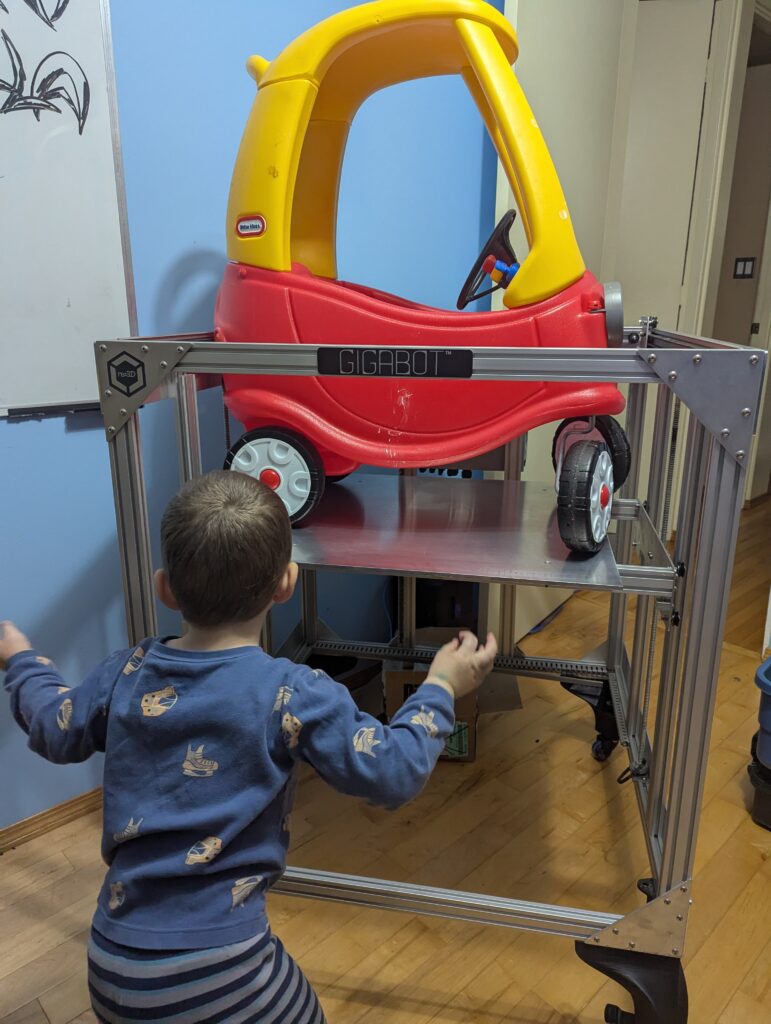
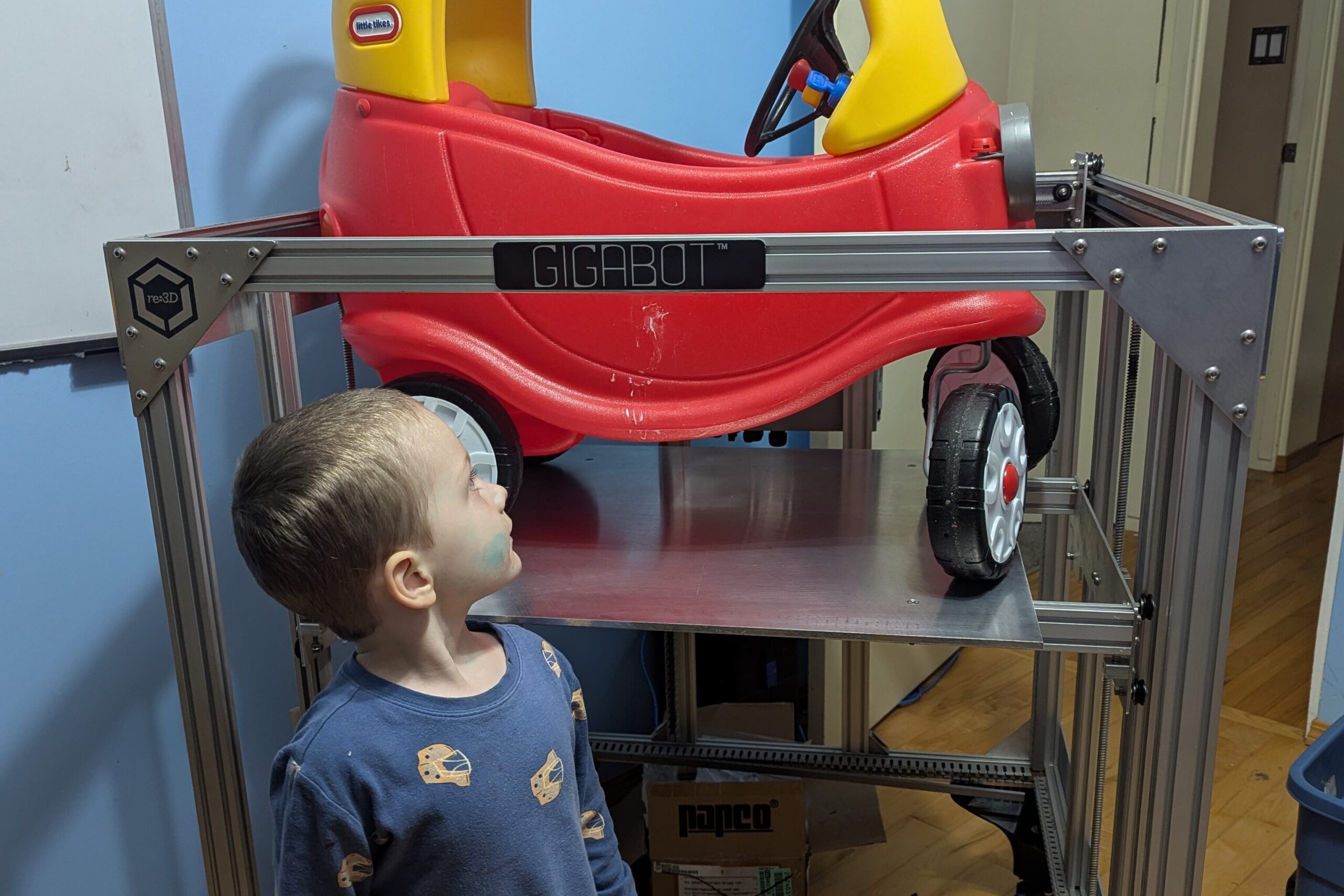
    My three-year-old just conducted what might be his first feasibility study. He was hanging out in the workshop, eyeballing my big 3D printer, and then glanced at his Little Tikes Cozy Coupe. The gears turned for a second before he landed on the obvious question: “Daddy, can you print a car with that?”

    Now, this isn’t your average desktop printer. It’s a beast—about four feet tall with a 24-inch cubed build volume. But even by those specs, printing an actual drivable vehicle is a bit of a stretch. Still, why crush a good idea with boring old reality?

    So I went with it. “You know what? Let’s find out.”

    I picked up his ride-on car, and set the thing right on the build plate. It fit with room to spare, which was pretty satisfying in itself. I hit a few buttons, the machine lit up, and the print head started moving around like it was warming the machine up to run.

    My kid was locked in. He stood there completely mesmerized by the whirring motors and glowing lights. In his mind, the printer wasn’t just going through the motions; it was actively working on producing Car 2.0. No need to explain G-code or layer adhesion—the magic was in the simple belief that it could happen.

    And that’s the cool part. Kids don’t see limits; they see potential. They look at a tool and ask “what’s the most awesome thing this could do?” It’s a good reminder to not overcomplicate things.

    Did the printer spit out a new car? Of course not. But it built a pretty solid memory. And for a few minutes, in a shop smelling faintly of over-cooked PLA plastic, anything felt possible.

  • Crowsnest Pass Adventure

    Crowsnest Pass Adventure

    Last week, Erika, Michael, and I embarked on an adventure that took us through some of Alberta’s most breathtaking scenery – the Crowsnest Pass. It was the perfect family road trip that combined natural beauty, history, and quality time together.

    The Journey Begins

    We started our journey in our brand new 2025 Toyota Woodland RAV4, a vehicle that proved to be the perfect companion for our mountain adventure. With Erika’s family history in the area, we had a great sense of what awaited us, and we were excited to see so many relatives we hadn’t seen in years.

    A Visit to the “Titan”

    One of our most memorable stops was in Sparwood, where we were able to see the massive “Titan” dump truck up close. Michael was absolutely thrilled – he even got a t-shirt and sweater featuring the truck, which he’s been wearing proudly ever since. It was great to see his excitement when he realized he was seeing a real-life version of the giant machine he’d been fascinated by.

    Family Reunions in the Mountains

    Our first two nights were spent at Erika’s father’s house nestled in the mountains. There’s something magical about being surrounded by towering peaks and fresh mountain air. We spent quality time with family members we hadn’t seen in years, catching up on life and sharing stories that only family can provide. The third night, we stayed at a comfortable hotel, giving us a chance to rest and recharge before our final day of exploration.

    History in Motion

    No trip to the area would be complete without visiting the famous Frank Slide. The historical significance of this event, combined with the stunning natural beauty of the surrounding landscape, left us all in awe. It was a powerful reminder of both nature’s power and human resilience.

    Driving Together

    We made sure to take turns driving, which made the journey even more enjoyable. Erika’s new RAV4 handled the mountain roads beautifully, and we all appreciated the comfortable ride as we navigated through the winding routes.

    What a Trip!

    This Crow’s Nest Pass adventure was exactly what we needed – a perfect blend of family time, historical exploration, and natural wonder. The memories we made together will last a lifetime, and Michael’s new truck memorabilia will serve as a constant reminder of our great adventure.

    This trip has left us eager to hit the road again, wondering what other breathtaking destinations our next adventure might bring!

  • A Rare Sighting: The Land Rover Defender

    A Rare Sighting: The Land Rover Defender

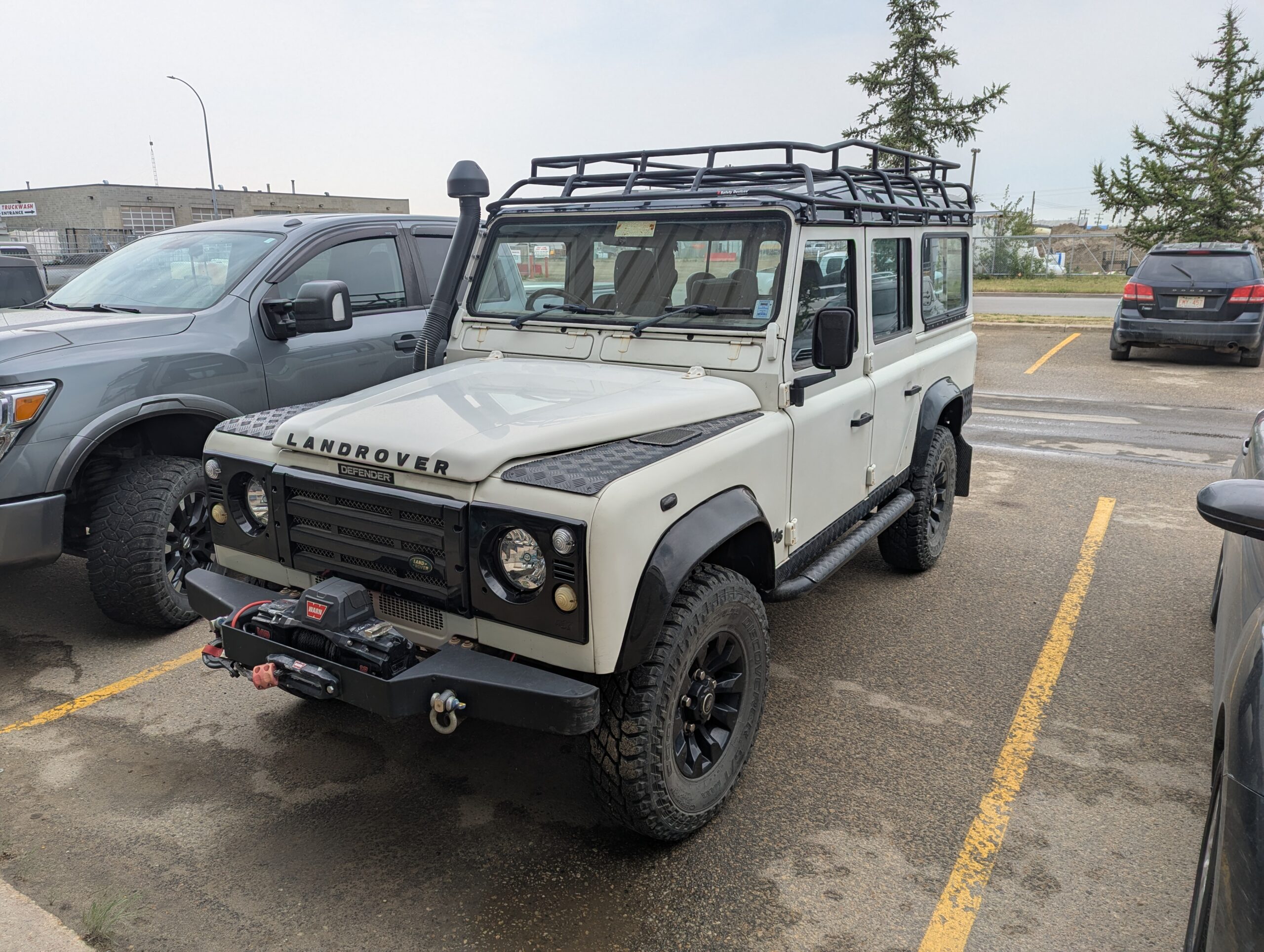
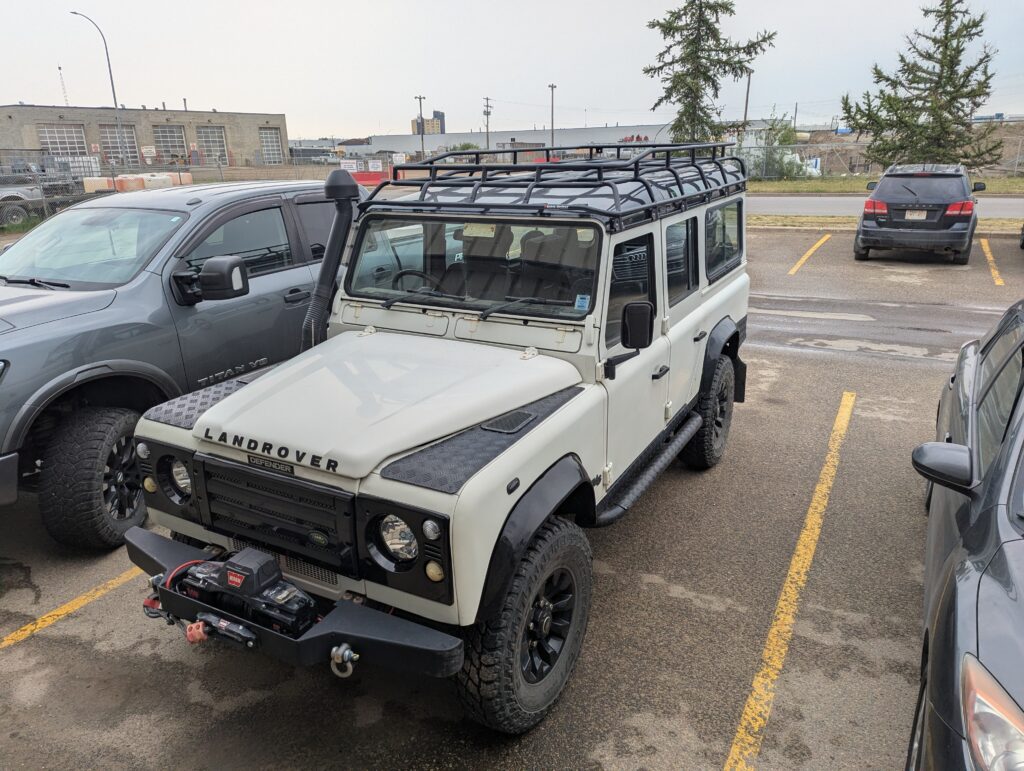
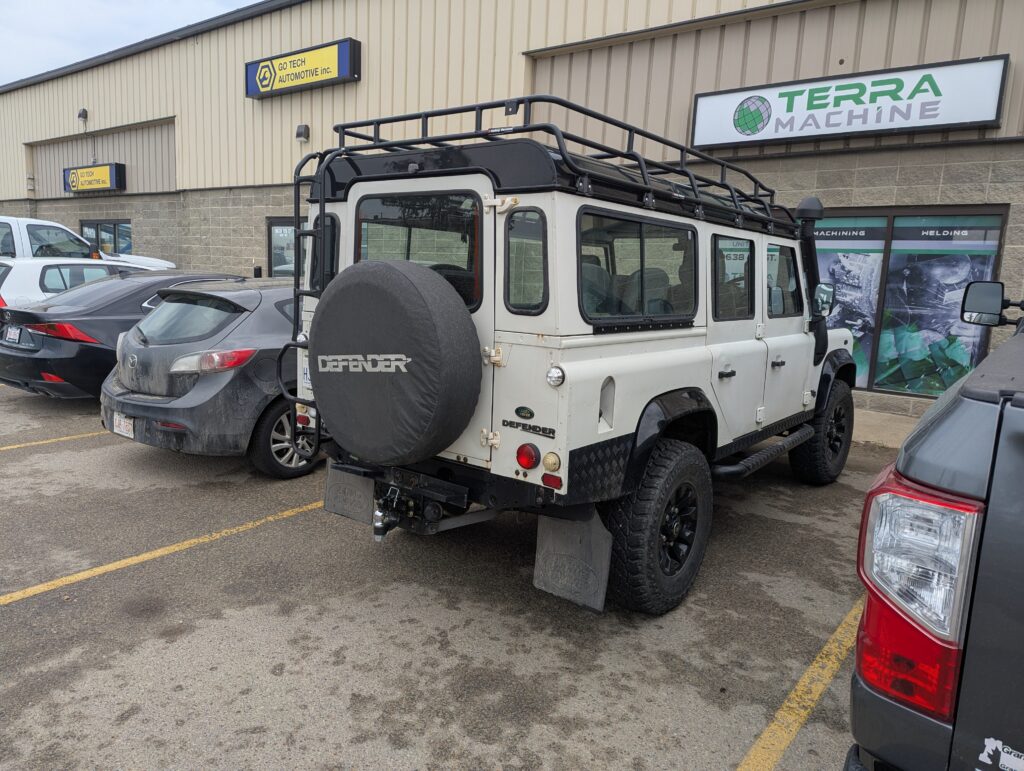
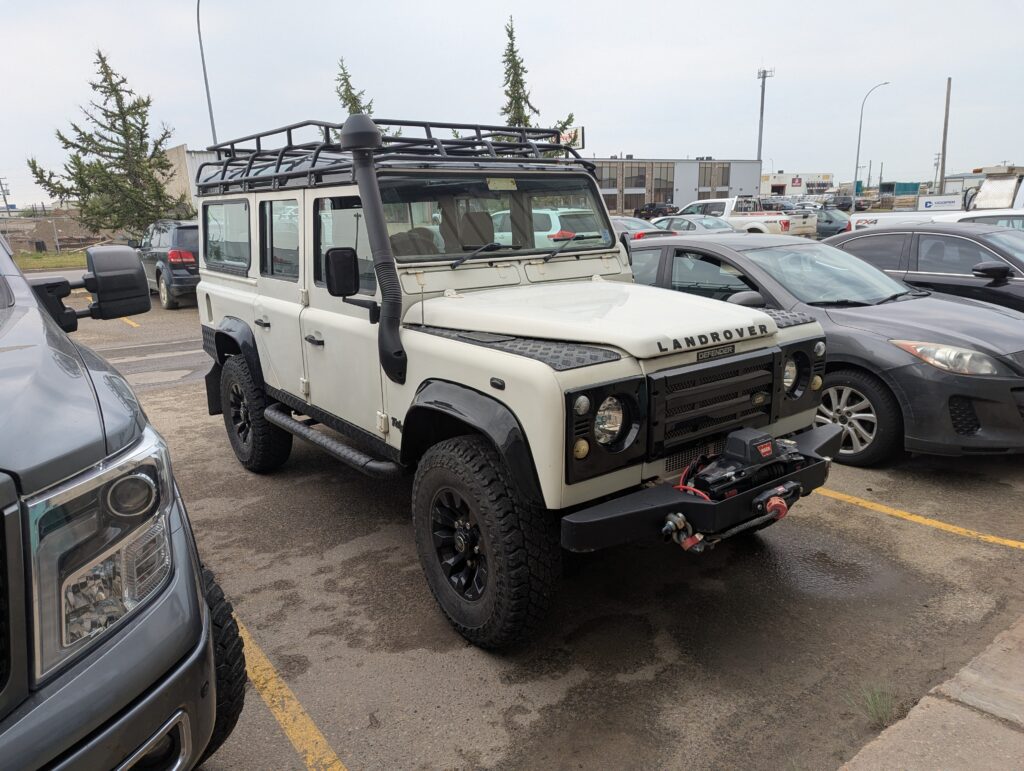
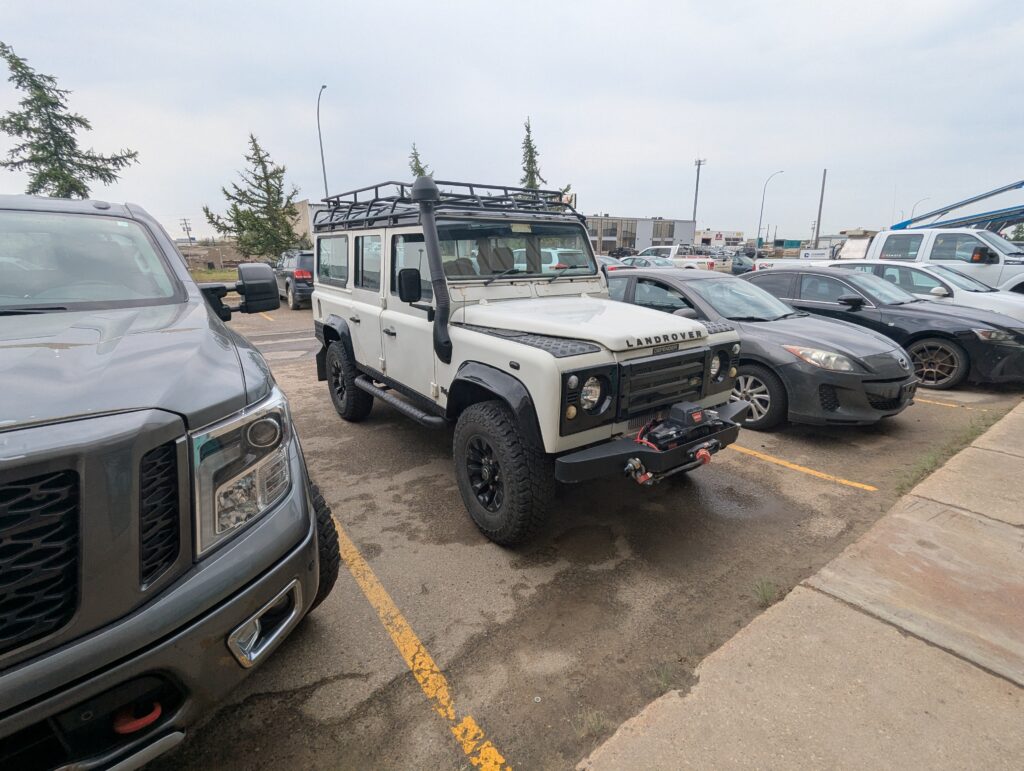
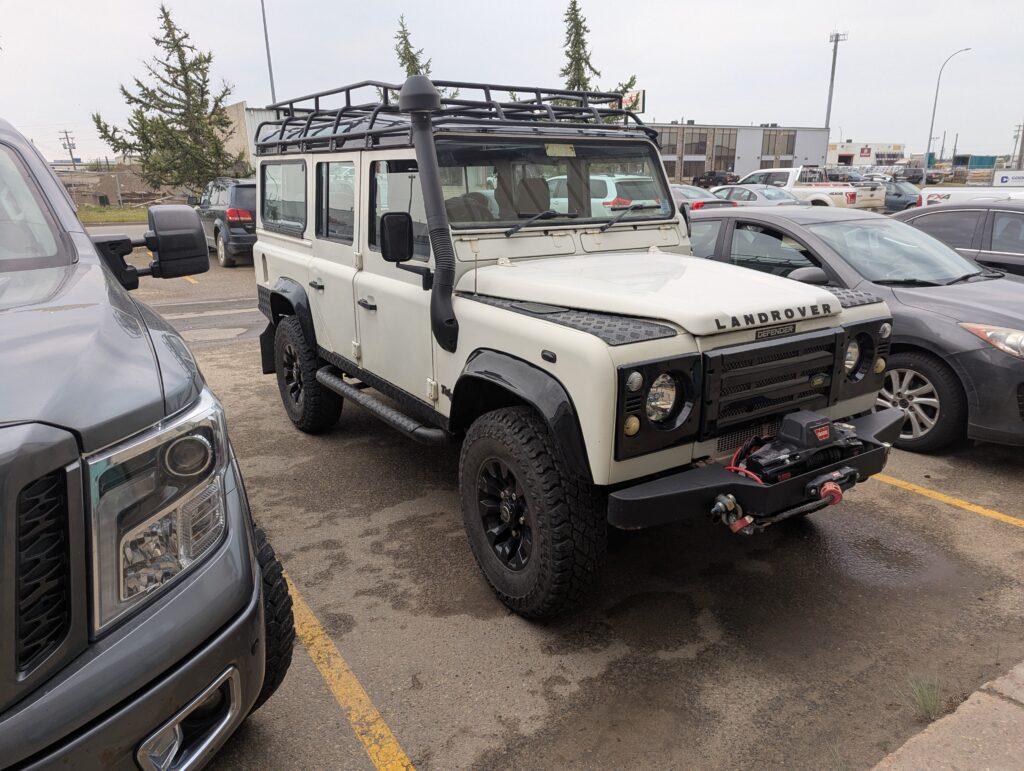
    Last week, I spotted something unusual in the parking lot at my shop — a pristine Land Rover Defender. While not uncommon in certain markets, seeing one in Canada is quite rare.

    The Defender stands as a testament to functional mechanical engineering. Its rugged design, reliability, and timeless appeal make it a true icon in the world of off-road vehicles. Built for durability and performance, it represents a bygone era of practical, no-nonsense engineering.

    In a world of modern SUVs and flashy designs, the Defender reminds us of the importance of simplicity, strength, and purposeful construction.

  • Small wife or Big Truck?

    Not sure if the trucks here are big or my wife is short. Thoughts?